
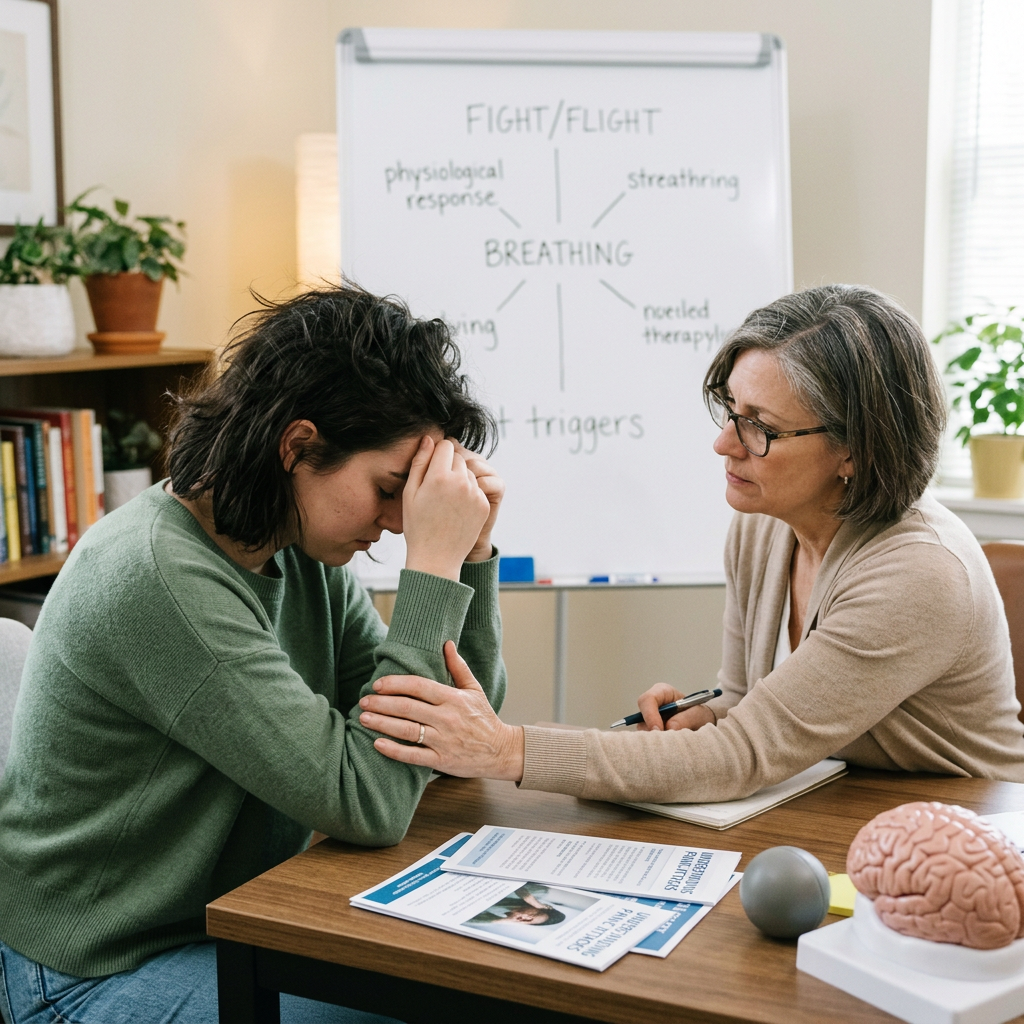
Panic attacks can feel terrifying when they happen. Your heart races, you can’t catch your breath, and you might feel like something is seriously wrong with your body. These experiences are real and frightening, but understanding what happens during a panic attack can help you feel less scared when one occurs.
What Happens During a Panic Attack
A panic attack is a sudden surge of intense fear or discomfort that reaches a peak within minutes. During this time, your body activates its alarm system even though there’s no actual danger present.
Think of it like a false alarm. Your body responds as if you’re facing a real threat, triggering what we call the “fight or flight” response. This is an automatic survival mechanism that humans have always had to protect us from danger.
The experience feels very real because the physical sensations are real. Your body is doing exactly what it’s designed to do when it perceives danger. The scary part is that this alarm goes off when there’s no actual emergency.
Common Physical Sensations
Panic attack symptoms can vary from person to person, but several physical experiences are common:
- Racing or pounding heartbeat
- Sweating or chills
- Trembling or shaking
- Shortness of breath or feeling smothered
- Chest pain or discomfort
- Nausea or stomach upset
- Dizziness or lightheadedness
- Numbness or tingling sensations
These sensations typically come on suddenly and can feel overwhelming. Many people describe feeling like the symptoms appear out of nowhere.
Why the Mental Experience Feels So Intense
Beyond the physical sensations, panic attacks create powerful mental and emotional experiences. These psychological aspects often make the episode feel even more frightening.
You might feel detached from yourself or your surroundings, as if you’re watching things happen from outside your body. This sensation is called depersonalization or derealization, and while it feels strange, it’s a common response to intense fear.
Many people experiencing a panic attack fear they’re losing control or “going crazy.” Others worry they’re having a heart attack or dying. These thoughts are part of the panic response, not signs that something terrible is actually happening.
The fear of fear itself can become a problem. After having one panic attack, you might start worrying about having another one. This worry can create a cycle where the fear of panic symptoms actually makes them more likely to occur.
The Physical Reality Behind the Fear
Understanding why these symptoms happen can make them feel less scary. When your body thinks you’re in danger, it releases stress hormones like adrenaline. These hormones create all those uncomfortable physical sensations.
Your heart beats faster to pump blood to your muscles so you can run or fight. You breathe faster to get more oxygen. You might feel dizzy because you’re breathing too quickly. Your muscles tense up to prepare for action.
None of these responses are dangerous, even though they feel uncomfortable. Your body is actually trying to protect you. The problem is that the alarm system has been triggered when no real danger exists.
How Long Do Panic Attacks Last
Most panic attacks reach their peak intensity within about 10 minutes. The symptoms usually begin to fade after that, though you might feel tired, shaky, or emotionally drained afterward.
Some people have panic attacks that last longer or come in waves. You might feel like the symptoms are starting to calm down, then they increase again. This pattern is also part of how anxiety can work in your body.
Knowing that panic attacks are time-limited can provide some comfort. Even though minutes can feel like hours when you’re experiencing intense fear, the worst of it will pass relatively quickly.
When Panic Becomes a Pattern
Having one or two panic attacks in your lifetime doesn’t mean you have a mental health condition. Many people experience panic in response to significant stress or life changes.
However, when panic attacks become frequent or when you start avoiding situations because you fear having another attack, this might indicate panic disorder. This is a treatable condition, and recognizing the pattern is an important first step.
Some people develop anxiety about being in places where escape might be difficult if a panic attack occurs. They might avoid crowded spaces, public transportation, or other situations. This response is understandable, but it can limit your life in significant ways.
Why Understanding Helps Reduce Fear
Learning about panic attack symptoms can actually reduce their intensity and frequency. When you understand what’s happening in your body, the sensations become less mysterious and threatening.
You start to recognize the signs earlier. You remember that these feelings, while uncomfortable, aren’t dangerous. You know that the episode will pass. This knowledge doesn’t make panic attacks pleasant, but it can make them more manageable.
Education is one component of effective treatment for panic. When combined with other strategies, understanding your symptoms can be empowering rather than frightening.
What You Can Do
If you’re experiencing panic attacks, several approaches can help. Breathing techniques can calm your body’s alarm response. Grounding exercises can help you feel more connected to the present moment.
Working with a mental health professional can provide additional tools and support. Therapy approaches like cognitive behavioral therapy have strong evidence for helping people reduce panic attacks and the fear surrounding them.
You don’t have to manage this alone. Panic attacks respond well to treatment, and many people learn to significantly reduce both the frequency of attacks and the fear they cause.
Moving Forward Without Fear
Panic attacks feel scary because they involve intense physical sensations and thoughts that something is seriously wrong. However, understanding that these responses are your body’s overactive alarm system can help reduce the fear.
The sensations are real, but they’re not dangerous. The fear is understandable, but it doesn’t have to control your life. With knowledge, support, and appropriate strategies, you can develop confidence in managing these experiences.
Remember that seeking help is a sign of taking care of yourself, not weakness. Many people have learned to work through panic attacks and reduce their impact on daily life.
Related Articles
This blog was developed with support from AI-assisted research tools. All clinical content was reviewed and approved by the Clinical Director, who retains full responsibility for accuracy and clinical appropriateness.
Important Medical and Legal Information
🚨 Crisis Support Information
If you are experiencing thoughts of self-harm or suicide, please reach out for immediate help:
- National Suicide Prevention Lifeline: 988
- Crisis Text Line: Text HOME to 741741 (mobile)
- Emergency Services: 911
- International Association for Suicide Prevention: Crisis Centers Directory
Remember: You are not alone, and help is available 24/7. These feelings are temporary, but suicide is permanent.
⚕️ Treatment Information Disclaimer
Important: The treatment information provided here is for educational purposes only and should not replace professional medical advice, diagnosis, or treatment. Always consult with qualified mental health professionals before making decisions about your treatment.
- Treatment approaches vary for each individual
- What works for others may not be suitable for your specific situation
- Professional assessment is necessary to determine appropriate treatment options
To schedule a consultation with Personal Balance Counseling: call (708) 949-8688 or email newclientinfo@personalbalancecounseling.com
🔍 Diagnostic Information Disclaimer
Important Notice: Information about mental health conditions and symptoms is provided for educational purposes only and cannot be used for self-diagnosis.
- Only qualified mental health professionals can provide accurate diagnoses
- Symptoms overlap between many different conditions
- Self-assessment tools are not substitutes for professional evaluation
- Early professional intervention leads to better outcomes
For professional assessment and diagnosis: Schedule an evaluation with our clinical team at (708) 949-8688 or email newclientinfo@personalbalancecounseling.com.
⚖️ Legal and Clinical Disclaimer
Limitation of Liability: Personal Balance Counseling and its staff provide this content for informational and educational purposes only. This content does not establish a therapist-client relationship.
- No Professional Relationship: Reading this content does not create a professional therapeutic relationship
- Not a Substitute for Professional Care: This information cannot replace individual professional mental health services
- Clinical Supervision: All content has been reviewed by licensed mental health professionals
- Emergency Situations: For mental health emergencies, contact emergency services or crisis hotlines immediately
- Individual Differences: Mental health treatment must be individualized and professionally supervised
By continuing to read this content, you acknowledge that you understand these limitations and agree that Personal Balance Counseling is not liable for any actions taken based on this information.