
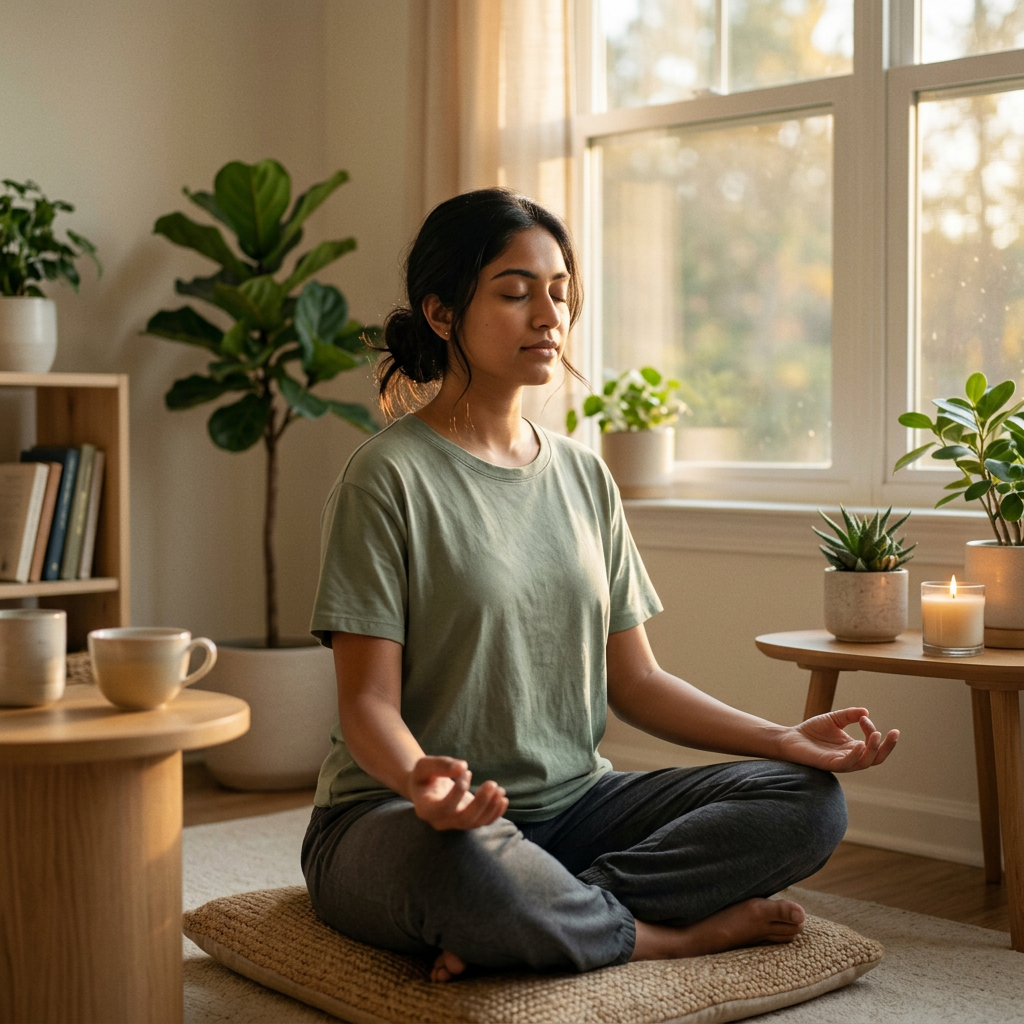
Anxiety shows up in our bodies and minds in many ways. Your heart might race, your thoughts might spin, or you might feel tension in your chest. These responses are normal parts of being human. When we face uncertainty or perceived threats, our minds and bodies react to keep us safe.
Meditation techniques offer one path toward finding relief from anxiety. These practices help you work with your thoughts and feelings rather than fighting against them. Many people find that regular meditation creates a sense of calm and helps them manage anxious moments more effectively.
What Meditation Really Means
Meditation is the practice of training your attention and awareness. It’s not about emptying your mind or stopping your thoughts completely. Instead, meditation helps you notice what’s happening in the present moment without judgment.
Think of meditation as building a skill, like learning to play an instrument or ride a bike. At first, it might feel awkward or difficult. Your mind will wander, and that’s completely normal. With practice, you’ll gradually become more comfortable with the process.
Many meditation techniques exist, and different approaches work for different people. Some focus on breath, others on body sensations, and some use guided imagery or sound.
How Mindfulness Connects to Anxiety Relief
Mindfulness means paying attention to your present experience with openness and curiosity. When you practice mindfulness, you notice your thoughts, feelings, and body sensations without trying to change them or push them away.
Anxiety often pulls our attention toward worries about the future or regrets about the past. Mindfulness gently brings your focus back to what’s happening right now. This shift can interrupt the cycle of anxious thinking.
Research shows that mindfulness practices can reduce anxiety symptoms in many people. These practices help you:
- Recognize anxious thoughts as mental events rather than facts
- Create space between a trigger and your response
- Notice physical tension before it builds up
- Develop a different relationship with uncomfortable feelings
Basic Breathing Meditation
Breathing meditation is one of the most accessible techniques for beginners. Your breath is always with you, making it a reliable anchor for your attention.
Here’s how to start:
Find a comfortable position, either sitting or lying down. Close your eyes or soften your gaze. Begin noticing your natural breath without trying to change it. Feel the air moving in and out through your nose or mouth. Notice your chest or belly rising and falling.
When your mind wanders to other thoughts (and it will), gently guide your attention back to your breath. Don’t judge yourself for getting distracted. Each time you notice your mind wandering and return to your breath, you’re strengthening your mindfulness skill.
Start with just five minutes. You can gradually increase the time as the practice feels more natural.
Body Scan Meditation
A body scan helps you notice physical sensations and release tension that anxiety creates. This technique moves your attention through different parts of your body systematically.
Lie down or sit comfortably. Starting with your feet, bring your attention to any sensations you notice there. You might feel warmth, coolness, tingling, pressure, or nothing at all. Whatever you notice is fine.
Slowly move your attention up through your body:
- Legs and knees
- Hips and lower back
- Stomach and chest
- Hands and arms
- Shoulders and neck
- Face and head
If you find areas of tension, breathe into them. Imagine the tension softening with each exhale. Don’t force anything to change, just notice with gentle awareness.
This practice typically takes 10-20 minutes. Many people find body scans helpful before sleep.
Grounding Through the Five Senses
This mindfulness technique helps when anxiety feels overwhelming. It uses your senses to anchor you in the present moment.
Wherever you are, notice:
- Five things you can see: Look around and really observe colors, shapes, and details
- Four things you can touch: Notice textures, temperatures, and how things feel against your skin
- Three things you can hear: Listen for nearby sounds and distant sounds
- Two things you can smell: If you can’t smell anything, think of two favorite scents
- One thing you can taste: Notice the current taste in your mouth or recall a taste you enjoy
This exercise works quickly because it engages your thinking brain rather than your anxious brain. You can do it anywhere—at home, at work, or in public spaces.
Loving-Kindness Meditation
Anxiety sometimes comes with harsh self-criticism. Loving-kindness meditation builds self-compassion and extends kindness toward yourself and others.
Sit comfortably and bring to mind a simple phrase of goodwill. Common phrases include:
- May I be safe
- May I be healthy
- May I be peaceful
- May I live with ease
Repeat these phrases silently, allowing their meaning to sink in. After a few minutes, extend the same wishes to someone you care about, then to neutral people, and eventually to all beings.
This practice might feel awkward at first, especially if you’re used to being self-critical. That’s okay. Compassion is a skill that grows with practice.
Making Meditation Work for You
Not every technique will resonate with everyone. Give each practice several tries before deciding if it works for you. What feels impossible today might feel different next week.
Start small. Five minutes of daily practice builds the skill more effectively than occasional longer sessions. Consistency matters more than duration.
Create a regular time and place for practice if possible. This helps meditation become a natural part of your routine rather than something you need to remember.
Be patient with yourself. Your mind will wander during meditation—that’s not failure, it’s completely normal. The practice is in noticing when your mind wanders and gently bringing it back.
When to Seek Additional Support
Meditation techniques can be powerful tools for managing anxiety, but they’re not the only answer. If anxiety significantly interferes with your daily life, working with a mental health professional can provide additional support and strategies.
A counselor or therapist can help you understand your specific anxiety patterns and develop a comprehensive approach to managing them. They might incorporate mindfulness practices alongside other evidence-based treatments.
Some people find that meditation initially increases their anxiety. If sitting quietly makes you more uncomfortable, that’s important information to share with a mental health professional. They can help you modify practices or explore other approaches that work better for you.
Building Your Practice
Remember that mindfulness for anxiety relief is a journey, not a destination. Some days will feel easier than others. Your practice doesn’t need to be perfect to be beneficial.
Start where you are. Choose one technique that feels approachable and commit to trying it for a week. Notice what happens without expecting dramatic changes immediately.
Over time, many people find that regular meditation practice changes how they relate to anxiety. The anxious thoughts and feelings might still arise, but they don’t take over as completely. You develop the ability to notice anxiety, acknowledge it, and choose how to respond.
This skill—responding rather than reacting—might be the most valuable gift that meditation techniques offer.
Related Articles
This blog was developed with support from AI-assisted research tools. All clinical content was reviewed and approved by the Clinical Director, who retains full responsibility for accuracy and clinical appropriateness.
Important Medical and Legal Information
⚕️ Treatment Information Disclaimer
Important: The treatment information provided here is for educational purposes only and should not replace professional medical advice, diagnosis, or treatment. Always consult with qualified mental health professionals before making decisions about your treatment.
- Treatment approaches vary for each individual
- What works for others may not be suitable for your specific situation
- Professional assessment is necessary to determine appropriate treatment options
To schedule a consultation with Personal Balance Counseling: call (708) 949-8688 or email newclientinfo@personalbalancecounseling.com
🔍 Diagnostic Information Disclaimer
Important Notice: Information about mental health conditions and symptoms is provided for educational purposes only and cannot be used for self-diagnosis.
- Only qualified mental health professionals can provide accurate diagnoses
- Symptoms overlap between many different conditions
- Self-assessment tools are not substitutes for professional evaluation
- Early professional intervention leads to better outcomes
For professional assessment and diagnosis: Schedule an evaluation with our clinical team at (708) 949-8688 or email newclientinfo@personalbalancecounseling.com.
⚖️ Legal and Clinical Disclaimer
Limitation of Liability: Personal Balance Counseling and its staff provide this content for informational and educational purposes only. This content does not establish a therapist-client relationship.
- No Professional Relationship: Reading this content does not create a professional therapeutic relationship
- Not a Substitute for Professional Care: This information cannot replace individual professional mental health services
- Clinical Supervision: All content has been reviewed by licensed mental health professionals
- Emergency Situations: For mental health emergencies, contact emergency services or crisis hotlines immediately
- Individual Differences: Mental health treatment must be individualized and professionally supervised
By continuing to read this content, you acknowledge that you understand these limitations and agree that Personal Balance Counseling is not liable for any actions taken based on this information.