
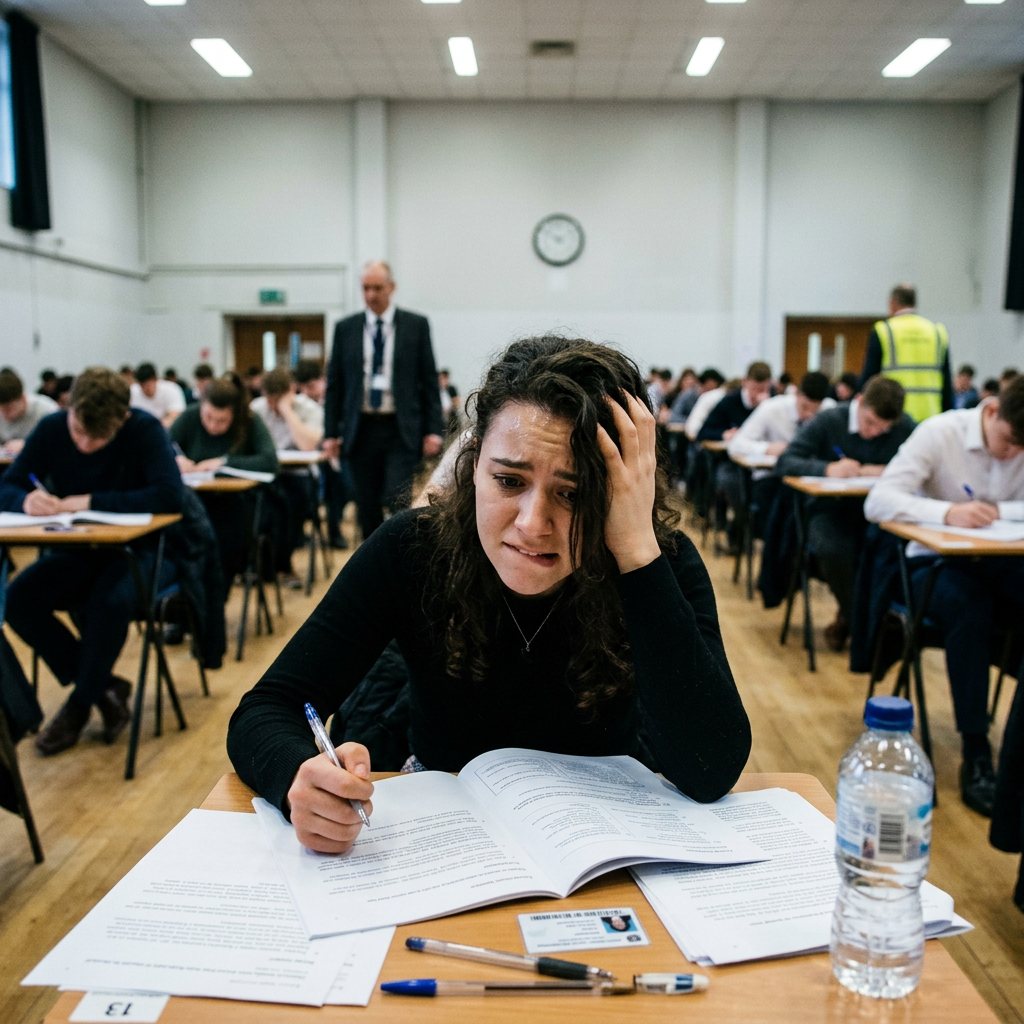
Anxiety is a normal human response to uncertainty or perceived threat. When you face important tests or evaluations, your body and mind naturally respond to the challenge ahead. However, when these responses become overwhelming, they can interfere with your ability to perform and feel well.
Exam anxiety symptoms can show up in many ways. Understanding what you’re experiencing is an important first step toward finding relief.
What Exam Anxiety Looks Like
Anxiety around tests and evaluations affects your body, thoughts, and behaviors. These responses happen because your brain perceives the exam as a threat, even when you’re physically safe.
Physical signs often include:
- Racing heart or chest tightness
- Sweating or shaking hands
- Upset stomach or nausea
- Headaches or muscle tension
- Difficulty sleeping before the test
Mental and emotional signs may involve:
- Racing thoughts or mind going blank
- Difficulty concentrating on the material
- Constant worry about failing
- Comparing yourself to others
- Feeling overwhelmed or panicky
You might also notice behavioral changes like avoiding study sessions, procrastinating, or wanting to skip the exam entirely. These are protective responses your mind creates, even though they often make the situation harder.
Evidence-Based Anxiety Treatments
The good news is that anxiety responds well to treatment. Different approaches work for different people, and you may find that combining methods gives you the best results.
Counseling and Therapy Approaches
Professional psychological counseling services offer structured support for managing anxiety. A trained counselor can help you understand your specific patterns and develop personalized coping techniques.
Cognitive Behavioral Therapy (CBT) is one of the most researched treatments for anxiety. This approach helps you notice and change thought patterns that increase worry. You learn to challenge unhelpful thoughts like “I’ll definitely fail” or “I’m not smart enough.” Over time, this reduces the intensity of anxious feelings.
Exposure-based techniques help you gradually face feared situations in manageable steps. For exam anxiety, this might mean practicing in test-like conditions or taking shorter practice tests before the real one.
Acceptance and Commitment Therapy (ACT) teaches you to notice anxious thoughts without fighting them. Instead of trying to eliminate anxiety completely, you learn to move forward with your goals even when worry is present. This can be particularly helpful when some nervousness is normal and expected.
Learning Practical Skills
Many effective strategies can be learned and practiced on your own or with professional guidance.
Relaxation techniques directly address the physical symptoms of anxiety. Deep breathing exercises slow your heart rate and signal safety to your nervous system. Progressive muscle relaxation involves tensing and releasing different muscle groups, which reduces physical tension.
Test preparation strategies also play an important role. When you feel genuinely prepared, your confidence naturally increases. This includes:
- Breaking study material into smaller chunks
- Creating a realistic study schedule
- Using active learning methods like practice questions
- Taking regular breaks to avoid mental fatigue
Time management skills help reduce last-minute cramming and the panic that often comes with it. Planning ahead creates a sense of control, which naturally lowers anxiety.
Lifestyle Factors That Support Mental Health
Your daily habits have a real impact on how your body handles stress and anxiety.
Regular physical activity reduces overall anxiety levels. You don’t need intense workouts—even a twenty-minute walk can help. Movement releases tension and improves mood through natural brain chemistry changes.
Sleep quality matters significantly. Anxiety and poor sleep create a difficult cycle, where each makes the other worse. Keeping consistent sleep and wake times helps your body regulate stress hormones more effectively.
Nutrition also plays a role. While no specific food cures anxiety, balanced meals keep your blood sugar stable, which helps maintain emotional steadiness. Limiting caffeine can reduce physical symptoms like racing heart or jitters.
When Medication May Help
For some people, medication is a helpful part of anxiety treatment. This is something to discuss with a medical provider, such as a doctor or psychiatrist.
Anti-anxiety medications work in different ways. Some are taken daily to reduce overall anxiety levels. Others are used as-needed for specific high-stress situations. Your provider can explain options and help you understand potential benefits and side effects.
Medication is often most effective when combined with counseling and skill-building. The medication may reduce symptoms enough that you can practice new coping techniques more easily.
Building Your Personal Treatment Plan
The “best” anxiety treatment is the one that works for your unique situation. What helps your friend or family member might be different from what helps you.
Consider starting with one or two approaches rather than trying everything at once. You might begin with a few breathing exercises and one small change to your study routine. Notice what helps, then build from there.
Professional support makes this process easier. A counselor can help you identify which strategies match your specific needs and teach you how to use them effectively. They also provide accountability and encouragement as you practice new skills.
Finding the Right Support
If exam anxiety symptoms are affecting your daily life or academic performance, reaching out for help is a sign of good judgment, not weakness. Many people benefit from professional guidance.
When looking for counseling services, consider asking:
- What experience do you have with anxiety and academic stress?
- What treatment approaches do you use?
- How long does treatment typically take?
Remember that finding the right fit sometimes takes trying more than one provider. The relationship you build with your counselor matters as much as the specific techniques you learn.
You don’t have to manage overwhelming anxiety alone. With the right combination of professional support, practical strategies, and self-care, most people see significant improvement in their symptoms and their ability to approach challenges with greater confidence.
Related Articles
This blog was developed with support from AI-assisted research tools. All clinical content was reviewed and approved by the Clinical Director, who retains full responsibility for accuracy and clinical appropriateness.
Important Medical and Legal Information
🚨 Crisis Support Information
If you are experiencing thoughts of self-harm or suicide, please reach out for immediate help:
- National Suicide Prevention Lifeline: 988
- Crisis Text Line: Text HOME to 741741 (mobile)
- Emergency Services: 911
- International Association for Suicide Prevention: Crisis Centers Directory
Remember: You are not alone, and help is available 24/7. These feelings are temporary, but suicide is permanent.
⚕️ Treatment Information Disclaimer
Important: The treatment information provided here is for educational purposes only and should not replace professional medical advice, diagnosis, or treatment. Always consult with qualified mental health professionals before making decisions about your treatment.
- Treatment approaches vary for each individual
- What works for others may not be suitable for your specific situation
- Professional assessment is necessary to determine appropriate treatment options
To schedule a consultation with Personal Balance Counseling: call (708) 949-8688 or email newclientinfo@personalbalancecounseling.com
💊 Medication Information Disclaimer
Critical Notice: Any medication information provided is for educational purposes only. This content does not constitute medical advice and should never be used as a substitute for consultation with a qualified healthcare provider.
- Always consult your prescribing physician before starting, stopping, or changing medications
- Medication effects vary significantly between individuals
- Side effects and interactions require professional monitoring
- Self-medication can be dangerous and is strongly discouraged
If you are experiencing medication side effects or concerns, contact your prescribing physician immediately.
🔍 Diagnostic Information Disclaimer
Important Notice: Information about mental health conditions and symptoms is provided for educational purposes only and cannot be used for self-diagnosis.
- Only qualified mental health professionals can provide accurate diagnoses
- Symptoms overlap between many different conditions
- Self-assessment tools are not substitutes for professional evaluation
- Early professional intervention leads to better outcomes
For professional assessment and diagnosis: Schedule an evaluation with our clinical team at (708) 949-8688 or email newclientinfo@personalbalancecounseling.com.
⚖️ Legal and Clinical Disclaimer
Limitation of Liability: Personal Balance Counseling and its staff provide this content for informational and educational purposes only. This content does not establish a therapist-client relationship.
- No Professional Relationship: Reading this content does not create a professional therapeutic relationship
- Not a Substitute for Professional Care: This information cannot replace individual professional mental health services
- Clinical Supervision: All content has been reviewed by licensed mental health professionals
- Emergency Situations: For mental health emergencies, contact emergency services or crisis hotlines immediately
- Individual Differences: Mental health treatment must be individualized and professionally supervised
By continuing to read this content, you acknowledge that you understand these limitations and agree that Personal Balance Counseling is not liable for any actions taken based on this information.