
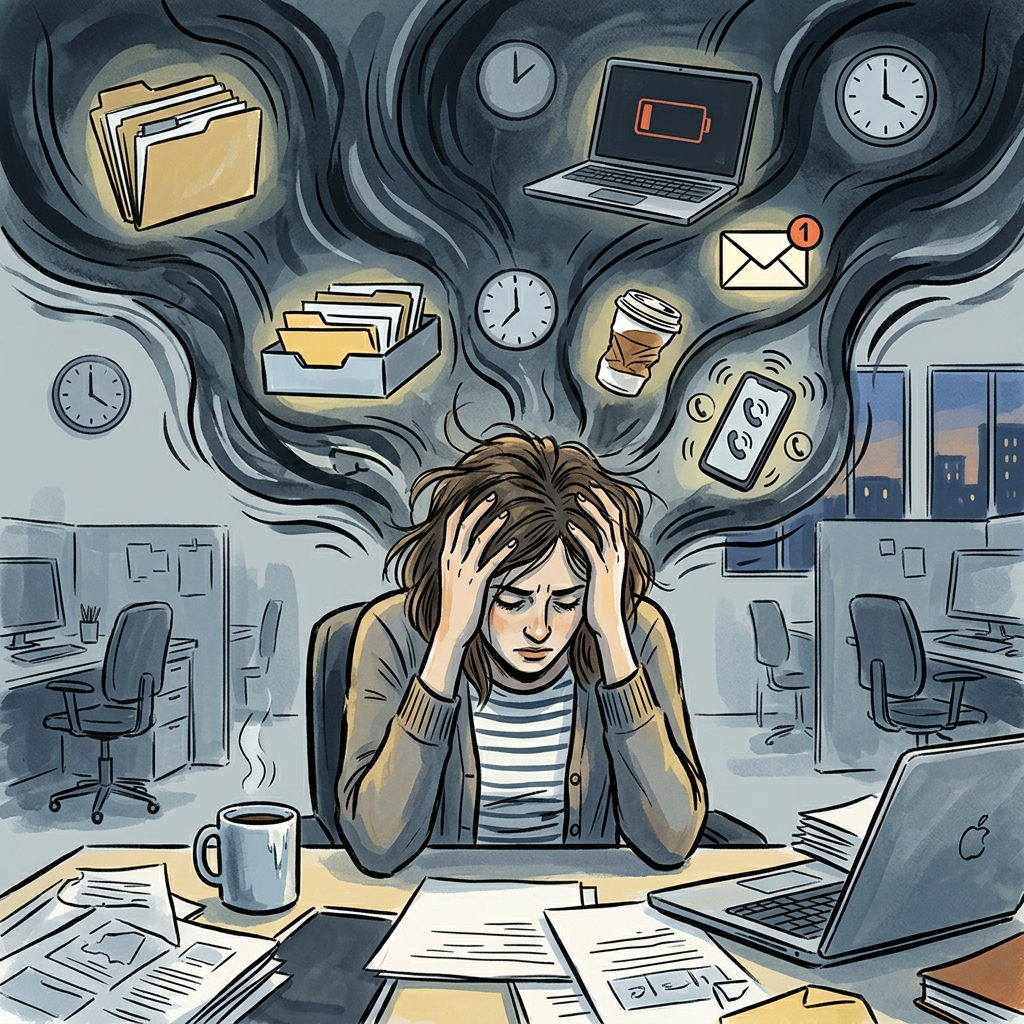
Work stress is the physical and emotional strain that happens when job demands feel greater than your ability to cope with them. It shows up when workplace pressures start affecting your body, mind, and daily functioning.
Most people experience some level of work stress at different points in their careers. This is a normal response to challenging situations. However, when stress becomes chronic or overwhelming, it can develop into more serious concerns.
What Causes Work Stress?
Work stress comes from many different sources. Understanding what contributes to stress can help you recognize it in your own life.
Common causes include:
- Heavy workloads or tight deadlines
- Lack of control over your tasks or schedule
- Unclear expectations about your role
- Poor communication from management
- Conflict with coworkers or supervisors
- Job insecurity or organizational changes
- Limited resources to complete your work
- Long hours or inflexible schedules
Sometimes stress comes from a single source. Other times, multiple factors combine to create ongoing pressure.
How Work Stress Affects Your Body
Your body responds to work stress in measurable ways. These physical signs are your system’s way of signaling that something needs attention.
Physical symptoms might include:
- Headaches or muscle tension
- Stomach problems or digestive issues
- Fatigue even after rest
- Changes in appetite
- Difficulty sleeping or staying asleep
- Weakened immune system leading to frequent illness
- Rapid heartbeat or chest tightness
These symptoms deserve care and attention. They represent real distress your body is experiencing.
Emotional and Mental Effects of Work Stress
Work stress affects more than just your physical health. It influences how you think, feel, and interact with others.
You might notice:
- Feeling anxious or worried frequently
- Irritability or short temper
- Difficulty concentrating or making decisions
- Decreased motivation or interest
- Feeling overwhelmed by small tasks
- Mood swings or emotional sensitivity
These emotional responses are valid signals that your current stress level warrants attention.
Workplace Burnout Symptoms: When Stress Becomes Chronic
Burnout develops when work stress continues over extended periods without adequate recovery. It represents a state of physical, emotional, and mental exhaustion.
Burnout typically involves three core features:
Exhaustion: You feel drained and depleted of energy. Rest doesn’t seem to restore you. Even starting the workday feels overwhelming.
Detachment: You become emotionally disconnected from your work. Tasks that once mattered now feel meaningless. You might develop cynical attitudes toward your job or coworkers.
Reduced effectiveness: Your performance declines despite effort. Completing tasks takes longer. You struggle with concentration and productivity.
Additional Signs of Burnout
Beyond the core features, workplace burnout symptoms often include:
- Withdrawing from responsibilities
- Using food, substances, or other behaviors to cope
- Taking frustrations out on others
- Skipping work or arriving late regularly
- Decreased satisfaction with accomplishments
- Feeling helpless or trapped
- Sense of failure or self-doubt
- Loss of purpose or meaning
These symptoms exist on a spectrum. You don’t need to experience all of them to be struggling with burnout.
The Difference Between Stress and Burnout
While related, stress and burnout are not the same thing.
Stress typically involves feeling too much—too many pressures, too many demands, too much urgency. People experiencing stress can often imagine that getting things under control would help them feel better.
Burnout involves feeling not enough—not enough energy, not enough care, not enough meaning. With burnout, even imagining relief feels difficult.
Stress is often characterized by overengagement. Burnout is characterized by disengagement.
Risk Factors for Workplace Burnout
Some situations and work environments increase the likelihood of developing burnout.
Higher risk contexts include:
- Jobs with high demands and low control
- Work that conflicts with your values
- Lack of recognition or reward for effort
- Unfair treatment in the workplace
- Poor work-life boundaries
- Inadequate support from supervisors or colleagues
- Role ambiguity or role conflict
Individual factors also play a role. Perfectionistic tendencies, difficulty setting boundaries, and external pressures can all contribute.
When Work Stress Requires Professional Support
Many people manage work stress through self-management strategies and lifestyle adjustments. However, some situations benefit from professional guidance.
Consider reaching out to a mental health professional if:
- Stress interferes significantly with daily functioning
- Physical symptoms persist or worsen
- You rely on substances to cope
- Relationships are suffering due to work stress
- You experience thoughts of self-harm
- Symptoms of depression or anxiety develop
- Self-management strategies haven’t helped
Seeking support is a sign of self-awareness, not weakness.
Managing Work Stress: Practical Approaches
While not everyone can change their job situation immediately, most people can take steps to manage stress more effectively.
Boundaries: Define clear limits between work and personal time. This might mean not checking email after hours or taking real lunch breaks.
Recovery: Build rest and restoration into your routine. Your body and mind need time to recover from stress.
Connection: Maintain relationships outside of work. Social support acts as a buffer against stress.
Movement: Physical activity helps your body process stress hormones and improve mood.
Communication: When possible, discuss concerns with supervisors. Sometimes problems have solutions you haven’t considered.
Perspective: Notice and challenge thoughts that increase stress. Not every problem requires immediate action or perfect solutions.
Moving Forward
Work stress and workplace burnout symptoms represent real experiences of distress that deserve attention and care. These responses don’t mean something is wrong with you—they indicate that current demands exceed available resources.
Understanding what you’re experiencing is an important first step. From there, you can explore what changes might support your well-being. This might involve practical strategies you implement yourself or professional support to navigate difficult circumstances.
Your experience matters. Taking steps to address work stress is an investment in your health and quality of life.
Related Articles
This blog was developed with support from AI-assisted research tools. All clinical content was reviewed and approved by the Clinical Director, who retains full responsibility for accuracy and clinical appropriateness.
Important Medical and Legal Information
🚨 Crisis Support Information
If you are experiencing thoughts of self-harm or suicide, please reach out for immediate help:
- National Suicide Prevention Lifeline: 988
- Crisis Text Line: Text HOME to 741741 (mobile)
- Emergency Services: 911
- International Association for Suicide Prevention: Crisis Centers Directory
Remember: You are not alone, and help is available 24/7. These feelings are temporary, but suicide is permanent.
⚕️ Treatment Information Disclaimer
Important: The treatment information provided here is for educational purposes only and should not replace professional medical advice, diagnosis, or treatment. Always consult with qualified mental health professionals before making decisions about your treatment.
- Treatment approaches vary for each individual
- What works for others may not be suitable for your specific situation
- Professional assessment is necessary to determine appropriate treatment options
To schedule a consultation with Personal Balance Counseling: call (708) 949-8688 or email newclientinfo@personalbalancecounseling.com
🔍 Diagnostic Information Disclaimer
Important Notice: Information about mental health conditions and symptoms is provided for educational purposes only and cannot be used for self-diagnosis.
- Only qualified mental health professionals can provide accurate diagnoses
- Symptoms overlap between many different conditions
- Self-assessment tools are not substitutes for professional evaluation
- Early professional intervention leads to better outcomes
For professional assessment and diagnosis: Schedule an evaluation with our clinical team at (708) 949-8688 or email newclientinfo@personalbalancecounseling.com.
⚖️ Legal and Clinical Disclaimer
Limitation of Liability: Personal Balance Counseling and its staff provide this content for informational and educational purposes only. This content does not establish a therapist-client relationship.
- No Professional Relationship: Reading this content does not create a professional therapeutic relationship
- Not a Substitute for Professional Care: This information cannot replace individual professional mental health services
- Clinical Supervision: All content has been reviewed by licensed mental health professionals
- Emergency Situations: For mental health emergencies, contact emergency services or crisis hotlines immediately
- Individual Differences: Mental health treatment must be individualized and professionally supervised
By continuing to read this content, you acknowledge that you understand these limitations and agree that Personal Balance Counseling is not liable for any actions taken based on this information.