
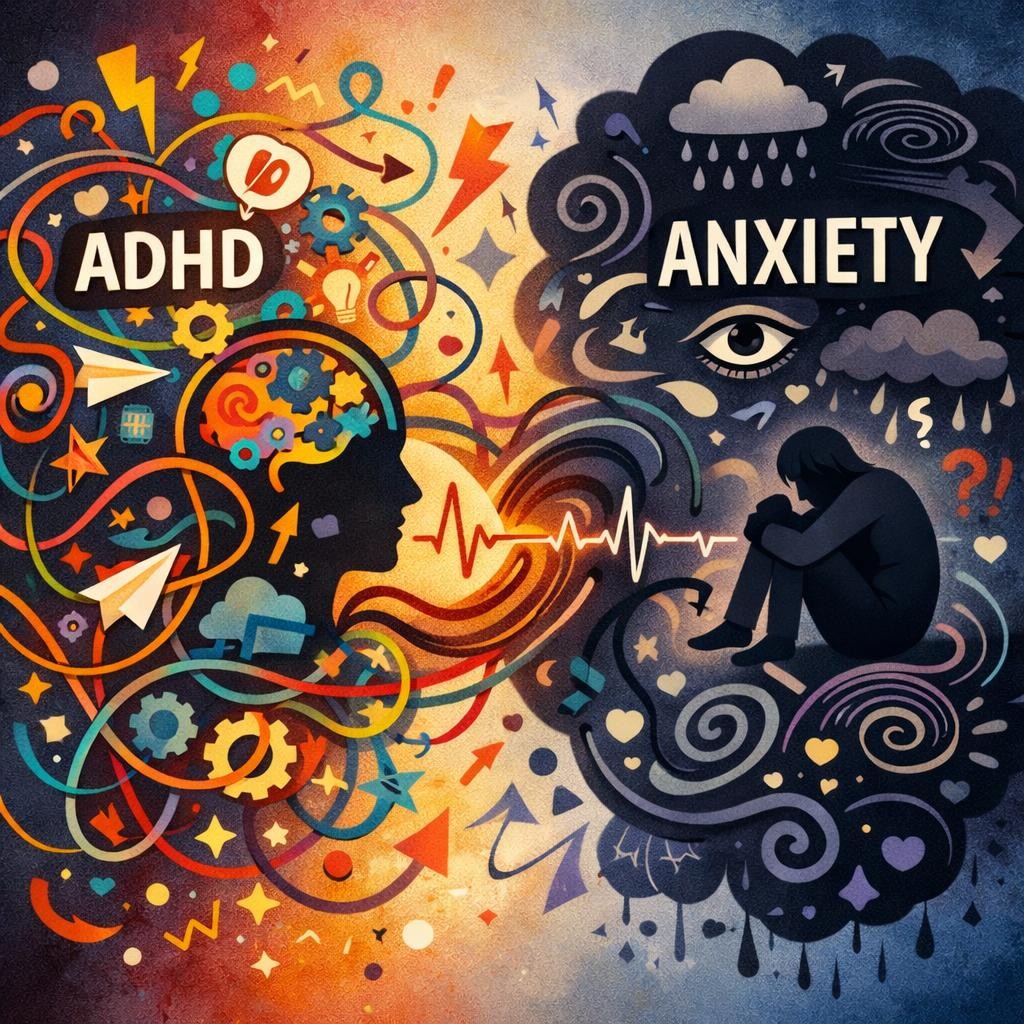
Many people with ADHD also experience frequent worry or anxious feelings. If you have ADHD and struggle with these feelings too, you’re not alone. The relationship between these two experiences is real and well-documented in research.
Understanding how ADHD and worried feelings connect can help you make sense of what you’re experiencing. It can also guide you toward helpful support.
The Link Between ADHD and Feeling Anxious
ADHD, which stands for Attention Deficit Hyperactivity Disorder, affects how your brain manages attention, impulses, and activity levels. Research shows that people with ADHD experience anxious feelings at much higher rates than those without ADHD.
Studies suggest that anywhere from 25% to 50% of adults with ADHD also deal with significant worry or nervousness. For children with ADHD, the numbers are similar. This isn’t just coincidence. There are real reasons why these experiences often occur together.
How ADHD Can Contribute to Anxious Feelings
ADHD doesn’t directly cause worried feelings in a simple, straightforward way. Instead, living with ADHD creates certain experiences and challenges that can lead to developing anxious responses over time.
Daily struggles create stress
When you have ADHD, everyday tasks that others find simple might feel much harder. You might:
- Forget important appointments or deadlines regularly
- Struggle to complete tasks on time
- Lose things frequently
- Have trouble organizing your space or schedule
- Find it hard to follow conversations or instructions
These ongoing challenges create stress. Stress is your body’s response to demands or pressure. When stress becomes chronic—meaning it happens regularly over a long period—it can develop into more persistent worried feelings.
Past difficulties shape expectations
Many people with ADHD have histories of struggle, even before getting diagnosed. You might have:
- Received criticism for things you couldn’t control
- Faced consequences for forgetting or being late
- Been told you weren’t trying hard enough
- Struggled in school or at work
- Experienced relationship conflicts
These repeated difficult experiences can create worry about future situations. You might start expecting things to go wrong because they have gone wrong before. This is a normal human response to uncertainty based on past patterns.
Working harder to keep up is exhausting
People with ADHD often develop strategies to manage their symptoms. You might check things multiple times, set numerous alarms, or spend extra hours organizing. While these strategies can help, they also require tremendous effort.
This constant extra work is tiring. When you’re exhausted, you have less capacity to handle additional stress. Small challenges can start to feel overwhelming. This can trigger fear, which is a protective survival response meant to keep you safe from threats.
Social situations become complicated
ADHD can affect social interactions in several ways:
- You might interrupt others without meaning to
- Following the flow of group conversations can be difficult
- You might miss social cues
- Remembering what people tell you might be challenging
If you’ve had negative social experiences because of these difficulties, you might start feeling nervous before social situations. You may worry about making mistakes or being judged.
Time pressure feels more intense
Many people with ADHD struggle with time management. This isn’t about being lazy or irresponsible. The ADHD brain processes time differently. You might:
- Underestimate how long tasks will take
- Get absorbed in one activity and lose track of time
- Feel constantly rushed or behind schedule
- Experience “time blindness,” where time feels unpredictable
Living with constant time pressure naturally creates anxious feelings. You might feel like you’re always trying to catch up.
The Cycle That Develops
Once anxious feelings start, they can actually make ADHD symptoms worse. This creates a difficult cycle:
Worried feelings make it harder to concentrate. When you can’t focus, you might fall behind on tasks. Falling behind increases stress and worry. More worry makes concentration even harder.
This isn’t your fault. It’s a pattern that many people with ADHD experience. Understanding the cycle is the first step toward interrupting it.
Biological Factors
Beyond these daily life experiences, there may also be biological connections between ADHD and worried feelings. Both conditions involve similar brain regions and chemicals, particularly those that help regulate:
- Attention and focus
- Emotional responses
- The body’s stress system
Some research suggests that people with ADHD might be more likely to develop heightened nervous system responses. Think of it as having a more sensitive internal alarm system. This system is meant to protect you from danger, but it might activate more easily or intensely.
Other Contributing Factors
Several other elements can play a role in the connection:
Sleep difficulties: ADHD often comes with sleep problems. Poor sleep makes both ADHD symptoms and anxious feelings worse.
Medication effects: Some people feel more nervous when taking stimulant medications for ADHD. Others find their worry decreases when ADHD symptoms are better managed. Everyone responds differently.
Co-occurring conditions: Sometimes people have both ADHD and a separate condition involving worry. These can exist together as two distinct experiences that each need attention.
What This Means for You
If you have ADHD and struggle with worried or nervous feelings, this doesn’t mean something is wrong with you. It means you’re dealing with challenges that naturally create stress and uncertainty.
Both ADHD and persistent worry respond well to treatment. Many approaches can help with both at the same time:
Therapy approaches
Cognitive-behavioral therapy teaches specific skills for managing both ADHD symptoms and worried thoughts. You learn to:
- Notice unhelpful thinking patterns
- Challenge predictions that may not be accurate
- Develop practical strategies for daily challenges
- Build confidence through small successes
Working with a therapist who understands both ADHD and worry-related concerns can be particularly helpful.
Practical strategies
Many people find relief through:
- Creating routines that reduce the number of decisions you need to make
- Using external reminders like alarms, apps, or visual cues
- Breaking large tasks into smaller, manageable steps
- Building in regular breaks to prevent overwhelm
- Finding physical activities that work for you
These strategies can reduce daily stress, which in turn can decrease anxious feelings.
Developing optimism
Learning to view challenges as opportunities to develop skills, rather than proof of failure, makes a difference. Research shows that developing a more hopeful outlook toward the future supports mental health recovery. This isn’t about forcing positive thinking. It’s about recognizing your capacity to learn and grow.
Optimism can be developed rather than being something you either have or don’t have. Working with a therapist trained in positive psychology interventions can help build this skill.
Medical support
Sometimes medication helps manage ADHD symptoms, which then reduces stress and worried feelings. Other times, addressing persistent worry directly with appropriate treatment improves overall functioning. A psychiatrist or medical doctor who understands both conditions can help you explore options.
Moving Forward
Understanding the connection between ADHD and anxious feelings is empowering. It helps explain experiences that might have felt confusing or isolating.
You’re not imagining these challenges. They’re real, they’re documented in research, and most importantly, they’re treatable. Many people with ADHD learn to manage worried feelings effectively and experience genuine satisfaction in their daily lives.
If you’re struggling, consider reaching out to a mental health professional who has experience with both ADHD and worry-related concerns. You deserve support that addresses your whole experience, not just one part of it.
The relationship between ADHD and anxious feelings is complex, but understanding it better is a step toward feeling better.
This blog was developed with support from AI-assisted research tools. All clinical content was reviewed and approved by the Clinical Director, who retains full responsibility for accuracy and clinical appropriateness.
Important Medical and Legal Information
🚨 Crisis Support Information
If you are experiencing thoughts of self-harm or suicide, please reach out for immediate help:
- National Suicide Prevention Lifeline: 988
- Crisis Text Line: Text HOME to 741741 (mobile)
- Emergency Services: 911
- International Association for Suicide Prevention: Crisis Centers Directory
Remember: You are not alone, and help is available 24/7. These feelings are temporary, but suicide is permanent.
⚕️ Treatment Information Disclaimer
Important: The treatment information provided here is for educational purposes only and should not replace professional medical advice, diagnosis, or treatment. Always consult with qualified mental health professionals before making decisions about your treatment.
- Treatment approaches vary for each individual
- What works for others may not be suitable for your specific situation
- Professional assessment is necessary to determine appropriate treatment options
To schedule a consultation with Personal Balance Counseling: call (708) 949-8688 or email newclientinfo@personalbalancecounseling.com
💊 Medication Information Disclaimer
Critical Notice: Any medication information provided is for educational purposes only. This content does not constitute medical advice and should never be used as a substitute for consultation with a qualified healthcare provider.
- Always consult your prescribing physician before starting, stopping, or changing medications
- Medication effects vary significantly between individuals
- Side effects and interactions require professional monitoring
- Self-medication can be dangerous and is strongly discouraged
If you are experiencing medication side effects or concerns, contact your prescribing physician immediately.
🔍 Diagnostic Information Disclaimer
Important Notice: Information about mental health conditions and symptoms is provided for educational purposes only and cannot be used for self-diagnosis.
- Only qualified mental health professionals can provide accurate diagnoses
- Symptoms overlap between many different conditions
- Self-assessment tools are not substitutes for professional evaluation
- Early professional intervention leads to better outcomes
For professional assessment and diagnosis: Schedule an evaluation with our clinical team at (708) 949-8688 or email newclientinfo@personalbalancecounseling.com.
⚖️ Legal and Clinical Disclaimer
Limitation of Liability: Personal Balance Counseling and its staff provide this content for informational and educational purposes only. This content does not establish a therapist-client relationship.
- No Professional Relationship: Reading this content does not create a professional therapeutic relationship
- Not a Substitute for Professional Care: This information cannot replace individual professional mental health services
- Clinical Supervision: All content has been reviewed by licensed mental health professionals
- Emergency Situations: For mental health emergencies, contact emergency services or crisis hotlines immediately
- Individual Differences: Mental health treatment must be individualized and professionally supervised
By continuing to read this content, you acknowledge that you understand these limitations and agree that Personal Balance Counseling is not liable for any actions taken based on this information.